
Rules
Part of Display advertising: signal versus noise
Reading the display advertising examples closely
Display advertising examples show how responsive, uploaded, native, dynamic, contextual, retargeting, account, and direct-deal formats serve different jobs.
What to take away
- An example shows a mechanismtrigger, eligible placements, claim, and outcome window.
- Every format carries its own control. Fixed art needs size and rights checks. Catalog units need feed freshness.
- Build one evidence record per example, and a failure version beside it.
- Take the outcome window from the original release, the media owner, or the platform report.
- Keep privacy and accessibility checks in one short note, away from the test steps.
A display example is evidence about how a unit was built. It is not evidence about what your account will get. Display advertising is the right starting point for sorting signal from noise before you reuse anything.
Six examples and the control each one needs
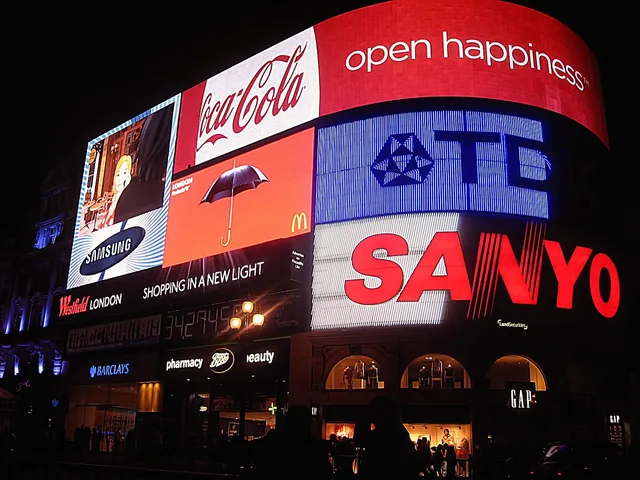
Coca-Cola's Share a Coke reached the US in 2014. The units put one first name in place of the wordmark on fixed banners. Because the art must stay exact, lock the size set, the fallback and the click area before launch.
Google's responsive display ads accept up to 15 images, 5 logos, 5 headlines and 5 descriptions. Layouts and previews follow from those inputs. The control is asset compatibility, since a headline can land beside unrelated app content.
Criteo and Meta catalog ads carry prices and inventory that move. Feed freshness and suppression rules do the work here. Judge them on net sales, not gross revenue.
Amazon Sponsored Display runs on competitor product pages, on related product pages, and across Amazon's third-party supply. Category accuracy and a look at the live page are the controls.
Booking.com retargeting banners assume an unfinished task. Consent and frequency caps keep the unit honest, and completed bookings get suppressed.
The New York Times and The Atlantic sell direct packages where a named position carries the value. Delivery proof, measurement terms and a fee reconciliation are written into the contract.
Display format fit and control
Static
- Good fit
- Exact art
- Primary control
- Sizes, fallback
- Failure risk
- Wrong size
- Review focus
- Click area
Responsive
- Good fit
- Many layouts
- Primary control
- Compatible assets
- Failure risk
- Claim mismatch
- Review focus
- Combination review
Dynamic
- Good fit
- Changing price
- Primary control
- Feed freshness
- Failure risk
- Stale inventory
- Review focus
- Suppression
Contextual
- Good fit
- Relevant page
- Primary control
- Category accuracy
- Failure risk
- Wrong category
- Review focus
- Actual page
Build the evidence record
Write the record once, then reuse the same fields.
- Name the platform, the format and the date you observed the unit.
- Capture the delivered unit and the page it sat on, with the page URL.
- Check every claim, price, right and disclosure against the advertiser's own material.
- Separate technical delivery from customer outcome.
- Show the supply path and the total fee, media plus production.
- Write the hypothesis and the reason it may not transfer.
| Field | What goes in it | Best source |
|---|---|---|
| Unit | Format, size, date observed | Screenshot and page URL |
| Claim | Price, offer, disclosure text | Advertiser's own page |
| Outcome window | The dates the result covers | Release, media owner, or platform report |
| Supply path | Where the impression was sold | Placement report |
| Cost | Media, production, fees | Invoice |
Recording audience and source data per example supports the checklist approach in improving display advertising.
Example: one record filled in
A filled record for a hypothetical account looks like this.
Platform: Google Display. Format: responsive display ad. Observed: 12 March 2026. Claim: 20 percent off a first order. Control: Target CPA bidding at a stated cost per action. Outcome window: 28 days, set by the test owner. Supply path: Display Network with no placement exclusions. Open question: whether the discount claim survives every automated layout.
Google's Target CPA help page explains that bidding is set to reach a chosen cost per action (Target CPA). Swap the figures for local inputs before launch, then set the review date.
Failure cases beside every good example
A catalog unit can show stale inventory at a price that no longer holds. A native placement can hide its commercial nature. A managed placement can receive delivery through another content signal. A responsive set can pair a price headline with an outdated image.
Keep these beside your launch QA, because they also answer common display advertising questions about hidden prices and unsafe inventory.
If an example rests on rights or product functions you lack, label it unsuitable instead of copying its visible result.
Compliance note in one place
The W3C explanation of info and relationships says visual structure should also be available programmatically. Test the delivered page with the users and the technology in scope (W3C rule).
For Canadian campaigns, the Office of the Privacy Commissioner sets out PIPEDA duties for collecting and disclosing personal information, which covers retargeting tags and audience lists (PIPEDA guidance). Both checks sit in one note, never inside the test steps.