
Strategy
Is winter PPC seasonality different in Edmonton, Halifax and Winnipeg?
ppc ad optimization for Edmonton, Halifax and Winnipeg winters: demand shifts, snow removal and heating calendars, travel and retail patterns, and pacing.
What to take away
- Winter PPC seasonality in Edmonton, Halifax and Winnipeg is three separate problems. Edmonton compresses demand into cold snaps, Halifax spreads it across a wet, windy season, and Winnipeg front-loads it into the coldest weeks.
- Snow removal and heating keywords peak at different times in each city. One national campaign calendar wastes budget in at least two of the three markets.
- Winter travel and retail pull the other way. Travel searches rise in Halifax and Winnipeg, while Edmonton retail holds steadier through the season.
- City parking bans are the most predictable triggers. Edmonton declares Phase 1 and Phase 2 bans, Halifax restricts on-street parking from December 15 to March 31, and Winnipeg clears by snow zone.
- Weather-triggered bidding and ad scheduling, fed by free Environment and Climate Change Canada alerts, let small budgets follow demand instead of guessing at it.
- Budget pacing matters most where the buying window is short: Edmonton and Winnipeg far more than Halifax.
How winter demand shifts differ in Edmonton, Halifax and Winnipeg
Edmonton winter demand shifts start with temperature, not snowfall. When Environment and Climate Change Canada forecasts minus 20 C or colder, searches for furnace repair, block heaters and emergency plumbing spike within hours. Retail and healthcare advertisers see a smaller but steadier lift, because Edmonton shoppers keep buying locally through the season rather than deferring purchases.
City parking bans are the sharpest Edmonton trigger. Edmonton can declare a Phase 1 seasonal ban on collector routes and a Phase 2 city-wide ban after heavy snow, and each declaration sends parking ban and tow truck searches up. Alberta Motor Association battery and tow requests climb in the same cold hours.
Winter demand curves by city
Edmonton
- Main driver
- Extreme cold
- Curve shape
- Sharp spikes
- Peak window
- Cold snaps
- Search focus
- Furnace, plumbing
Halifax
- Main driver
- Rain, wind, ice
- Curve shape
- Long, flat
- Peak window
- Nov-Mar
- Search focus
- Outages, roof
Winnipeg
- Main driver
- Early, long cold
- Curve shape
- Compressed
- Peak window
- Few active weeks
- Search focus
- Retail, service
Halifax winter demand shifts look different. The city gets more rain, freezing rain and wind than deep cold, so demand spreads across a longer, flatter curve from November to March. Nova Scotia Power's outage map and storm alerts become the reference point, and storm searches cluster around outages and roof damage rather than extreme cold.
Halifax PPC advertising therefore rewards longer flights and steadier daily budgets instead of sharp bursts. The same daily budget carries further, because demand rarely spikes hard enough to exhaust it in a single day.
Winnipeg winter demand shifts are the most compressed of the three. Cold arrives earlier and stays longer, and the city's retail and service demand concentrates into fewer active weeks. Efficiency Manitoba rebates for insulation and heating upgrades add a research wave in December and January, on top of emergency searches.
Winnipeg businesses also face a shorter comfortable shopping season, which pushes more of the year's local search volume into a narrow window. The City of Winnipeg's Know Your Zone app sorts residential streets into snow zones, so each plowing notice moves a different set of neighborhoods and their parking searches.
Alberta's Utilities Consumer Advocate publishes free electricity and natural gas rate comparisons, and Alberta BusinessLink offers no-cost advice to small firms. Both shape how much local advertisers can reinvest in paid search during slow months, which affects how aggressively Edmonton campaigns can bid in January.
Snow removal and heating calendars for Edmonton, Halifax and Winnipeg
Snow removal and heating calendars should be built separately, because the two demand types respond to different weather signals. Snow removal responds to accumulation forecasts. Heating responds to sustained low temperatures and to the first cold snap of the season.
Snow and heating campaign start dates
- Mid-OctoberEdmonton snow removal live
- Early OctoberWinnipeg snow removal live
- Late OctoberHeating campaigns live
- NovemberHalifax snow removal live
- December-JanuaryWinnipeg heating peak
Edmonton snow removal advertisers should have campaigns live by mid-October and expect the first meaningful volume in November. Heating campaigns can start later, in late October, and should stay live through March. Edmonton's cold snaps produce short, intense windows where cost per click rises quickly, often several times the quiet-week rate.
Halifax snow removal demand is less predictable because many storms arrive as rain or mixed precipitation. The Halifax Regional Municipality winter parking ban runs from December 15 to March 31, which gives advertisers a dated trigger. Keep campaigns live from November through March with modest daily budgets, and rely on weather triggers rather than fixed dates.
Heating demand in Halifax tracks temperature dips rather than snowfall.
Winnipeg snow removal campaigns should be ready by early October, since accumulation can start before Thanksgiving. The annual snow route parking ban applies overnight from November 1 to April 30, usually 2 a.m. to 7 a.m. Winnipeg heating season advertising peaks in December and January, when sustained cold keeps furnace and insulation searches high.
Budget should be reserved for those two months rather than spread evenly. Manitoba Hydro's budget payment plan spreads winter gas and electricity costs across 12 months, which softens bill shock.
Manitoba's business portal is a useful starting point for Winnipeg advertisers checking registration, tax and program requirements before committing seasonal spend.
Winter travel and retail patterns across the three cities
Winter travel searches behave differently in each market. Halifax sees a clear January and February lift in searches for southern flights and all-inclusive packages, partly because the wet coastal winter pushes people to book escapes. Halifax Stanfield International Airport supplies the capacity through Air Canada, WestJet and Sunwing sun routes.
Edmonton shows a similar but smaller lift, concentrated in the weeks after New Year. Edmonton International Airport's route map leans year-round, so the January travel spike is shallower than Halifax's.
Winnipeg travel demand is the most seasonal of the three. Bookings and searches cluster tightly in January, when cold and holiday fatigue combine, and drop off quickly by March. Travel advertisers in Winnipeg should weight budgets heavily toward that single month, where WestJet keeps a base at Winnipeg Richardson International Airport.
Travel and retail winter patterns
Edmonton
- Travel lift
- Small, post-New Year
- Retail pattern
- Steady all winter
- January focus
- Steady retail
Halifax
- Travel lift
- January-February
- Retail pattern
- Weather-sensitive
- January focus
- Travel peak
Winnipeg
- Travel lift
- Tight January cluster
- Retail pattern
- Holiday weeks only
- January focus
- Retention, remarketing
Retail patterns run the other way. Edmonton retail holds up through the winter because the city's population and service base are large enough to sustain steady local search volume. Rogers Place game nights and the Silver Skate Festival each February lift downtown restaurant, parking and rideshare searches.
Halifax retail is more weather-sensitive, with foot traffic falling on storm days and recovering quickly afterwards. Promotions timed to the calm days between systems convert better.
Winnipeg retail concentrates around holiday weeks and then thins out. Festival du Voyageur, held each February in Saint-Boniface, pulls visitor searches into hotel and restaurant terms. Local retailers there often find that January is better spent on retention and remarketing than on broad prospecting.
Budget pacing when seasonality compresses into fewer weeks
When demand compresses, pacing decisions matter more than bid tweaks. A campaign that spends evenly across a compressed season will run out of budget in the weeks that matter and overspend in the weeks that do not.
Budget pacing steps for compressed seasons
- Pull three winters of search volume data
- Set separate monthly budgets per city
- Cap daily spend in low-demand weeks
- Review pacing weekly in December and January
- Shift underspent Halifax budget to colder cities
The wider shifts covered in our guide to advertising agencies, including broader matching and generated assets, make it easier to cover more seasonal queries with fewer ad groups, which helps when budgets are tight.
Manitoba business research offers market and cost context that Winnipeg advertisers can use to sanity-check their own conversion assumptions before setting budgets.
Weather-triggered bidding and ad scheduling with ECCC alerts
Weather-triggered bidding is the most direct way to follow winter demand. Google Ads has no built-in weather setting, so most advertisers run a Google Ads script against a weather feed or use a tool such as WeatherAds, which adjusts bids when temperature or precipitation crosses a threshold. Microsoft Advertising covers similar ground with day and hour scheduling.
A script fed by Environment and Climate Change Canada alerts costs nothing but your time. Third-party weather tools typically start under $100 a month for a small account.
Ad scheduling is the simpler option. If your data shows that conversions in Edmonton cluster on weekday mornings after a cold night, schedule bids up for those hours and down elsewhere. Halifax campaigns usually need flatter schedules because demand is less concentrated.
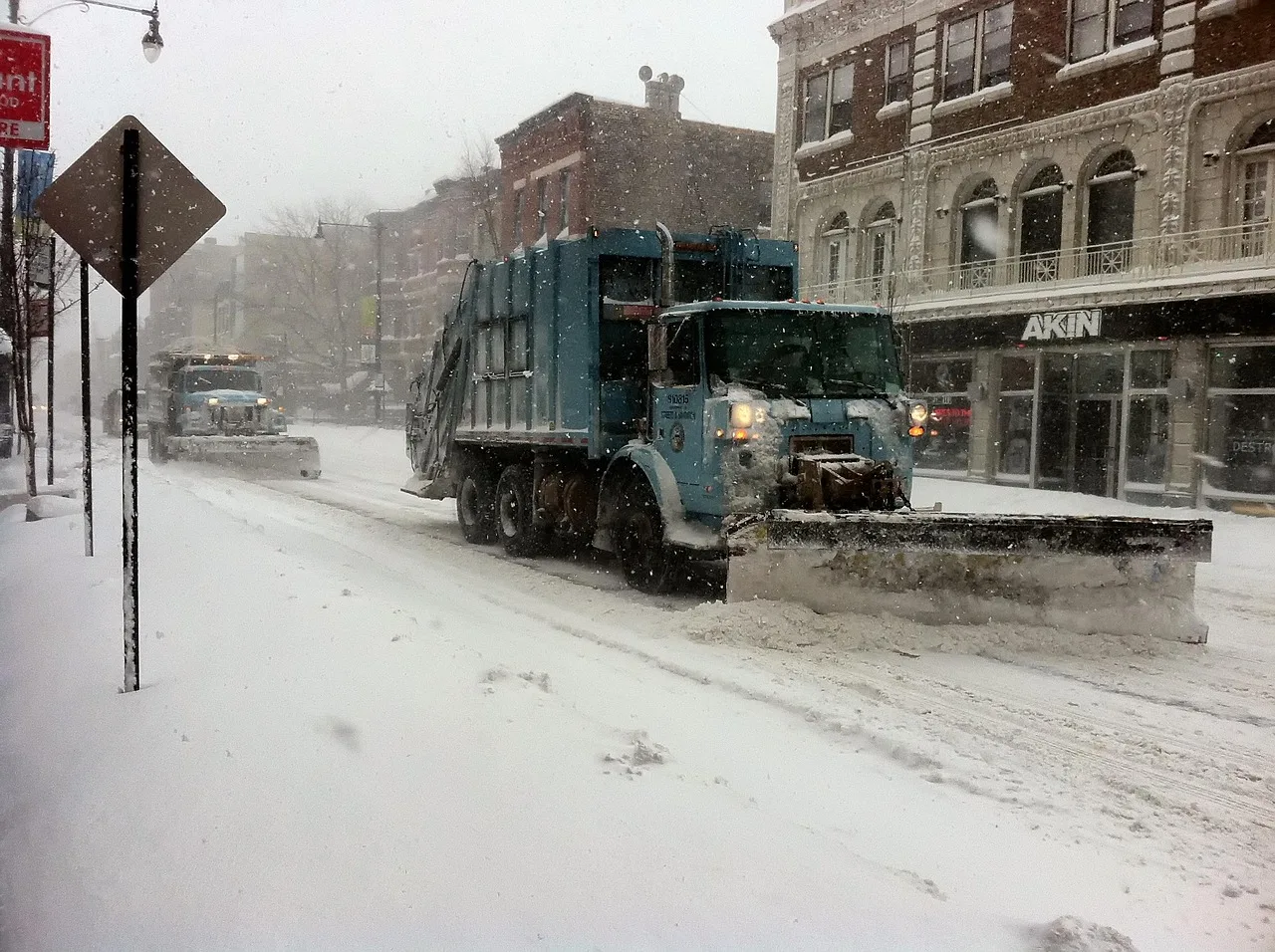
For snow removal advertisers, the trigger should be forecast accumulation, not current conditions. Bids raised the day before a storm capture people booking ahead. Bids raised during the storm capture people who are already stuck. Edmonton's parking ban announcements and Winnipeg's snow zone notices are the loudest signals you can automate.
Heating advertisers should trigger on sustained cold rather than a single cold night, because furnace replacement decisions take longer than emergency calls. Our gst hst google ads canada guide also matters here, since short pre-roll and vertical creative perform well for service businesses during cold snaps.
Provincial road condition feeds, 511 Alberta, Nova Scotia 511 and Manitoba 511, are free and update through storms, which makes them useful bid triggers for towing and winter tire advertisers.
A month-by-month campaign calendar for each city
The table below maps the main demand windows, including the parking ban dates. Treat it as a starting frame and adjust with your own data.
Edmonton
- September
- Build weather triggers, load last winter's data
- October
- Snow removal live, heating warming up
- November
- Both categories active
- December
- Heating peak, retail peak
- January
- Cold snap surges, travel lift
- February
- Heating steady, retail steady
- March
- Demand tapers
- April
- Heating campaigns off
Halifax
- September
- Load Nova Scotia Power outage feed
- October
- Snow removal live, low budgets
- November
- Flat budgets, weather triggers
- December
- Travel and retail lift, winter parking ban starts December 15
- January
- Travel peak, storm response
- February
- Travel steady, storm response
- March
- Demand tapers slowly, parking ban ends March 31
- April
- Low demand
Winnipeg
- September
- Load Know Your Zone notices
- October
- Snow removal live early
- November
- Heating ramps up, snow route ban starts November 1
- December
- Heating and retail peak
- January
- Travel and heating peak
- February
- Heating high, travel fading
- March
- Sharp drop off
- April
- Snow route ban ends April 30
Use the same table to set your own thresholds. If a city's demand is flatter than the table suggests, move budget toward the cities where compression is real.
Our guide to display advertising is worth reviewing before you finalize creative for the season, because retargeting formats change how winter remarketing performs across these markets.
- Snow removal campaigns live by mid-October in Edmonton and early October in Winnipeg
- Heating campaigns live by late October in all three cities
- Weather triggers set on Environment and Climate Change Canada accumulation forecasts and sustained cold
- Edmonton parking ban phases, Halifax's December 15 to March 31 ban, and Winnipeg snow zone notices loaded as calendar triggers
- Monthly budgets split by city, not held nationally
- Travel budget weighted to January in Winnipeg and Halifax
- Weekly pacing review scheduled through December and January
Nova Scotia's growth and development department publishes context on regional business conditions that Halifax advertisers can use when setting seasonal targets. The province's programs and services pages cover supports that may offset part of the cost of a winter campaign push.